Few people realize how powerful this “sap” is… but there’s something you should know first 💬👀👇
At a glance, this plant might look like just another wild weed. But it’s actually very similar to species in the Sonchus group — often called sow thistle — known for releasing a milky latex when the stem is cut.
That white liquid you see? It’s not ordinary sap. It’s a latex-like substance produced by the plant as a defense mechanism.
🌿 What is this milky sap?
Plants like Sonchus and even relatives such as Taraxacum officinale produce this white latex when damaged.
It helps the plant:
- Seal wounds
- Deter insects
- Protect against infection
In other words, it’s part of the plant’s survival system — not something originally meant for human consumption.
⚠️ Here’s where many people get it wrong
Content online often exaggerates claims like: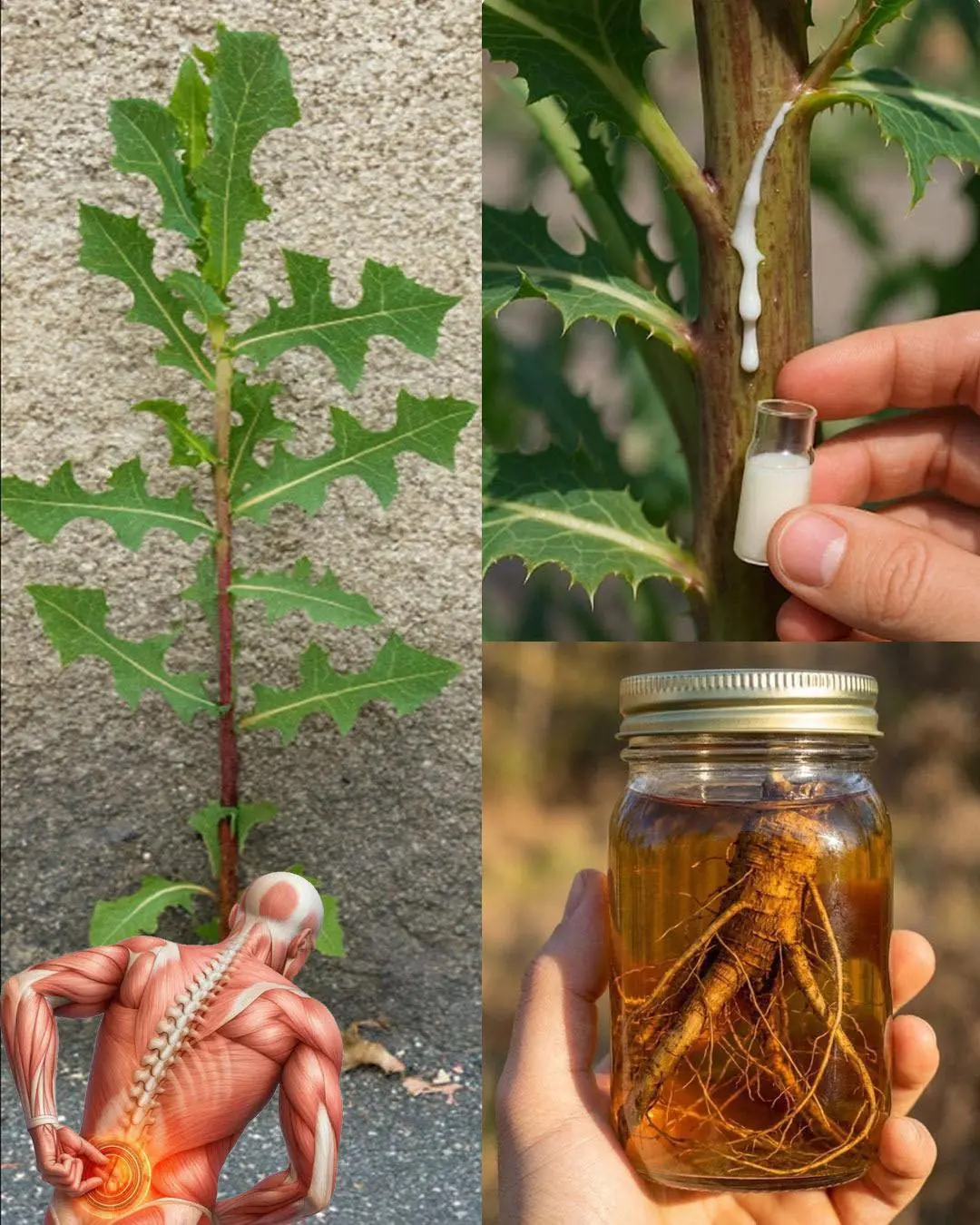
- “Cures back pain instantly”
- “Repairs joints”
- “Miracle anti-inflammatory”
The truth is much less dramatic.
While some of these plants have been used in traditional herbal practices, there’s no strong scientific evidence that this sap alone can treat serious conditions like chronic pain or spinal issues.
That image of back pain relief? It’s symbolic — not proof.
💡 So… does it have any real use?
Some traditional uses of similar plants include:
- Mild digestive support (when properly prepared)
- Nutritional greens (young leaves, not the sap)
- Folk remedies for minor issues
But the raw sap itself is not commonly used directly, and in some cases can even irritate the skin.
🚫 Important safety note
Before experimenting:
- Some milky plant saps can be toxic or irritating
- Misidentification is very common
- “Natural” does NOT mean safe
If you’re unsure, it’s better not to use it at all.
🌍 The real takeaway
Plants like this are fascinating — and yes, they do have value. But not always in the exaggerated way social media suggests.
The real “power” isn’t in miracle cures…
It’s in understanding nature correctly.